Practice Insight: Ensuring Compliance with the Time-Delayed Safes Policy

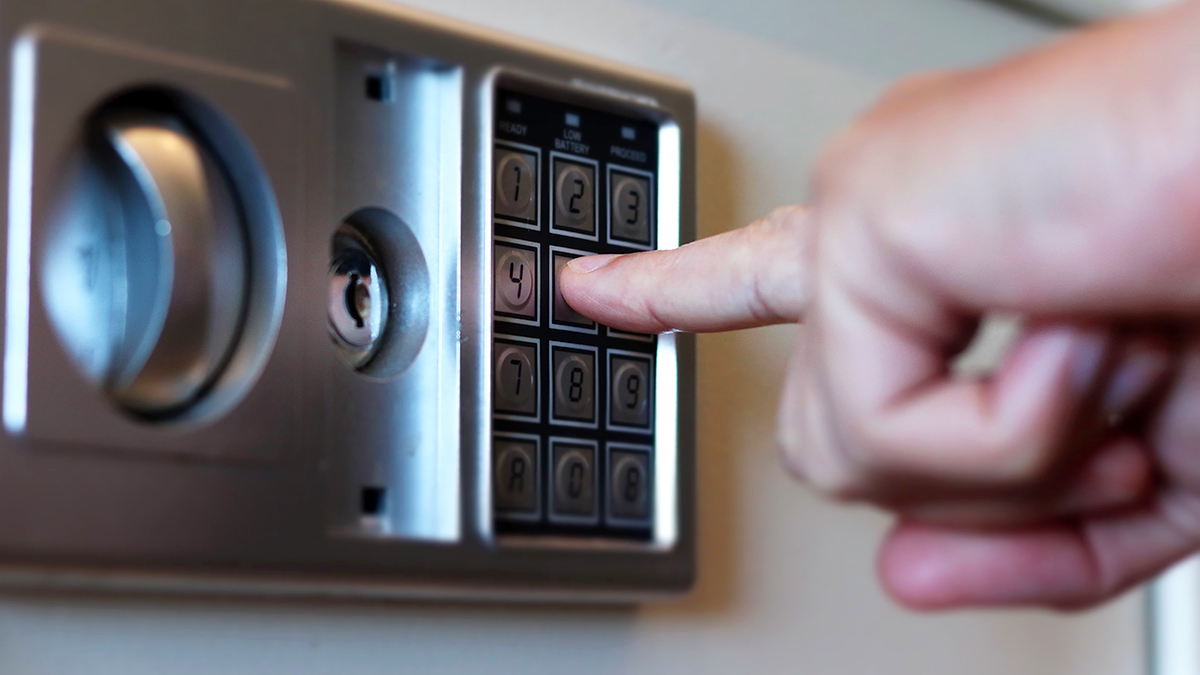
Time-delayed safes and associated signage are important tools to help deter pharmacy robberies. In March 2023, the College’s Board of Directors approved the requirement for all community pharmacies to use time-delayed safes for securing narcotics. Additionally, community pharmacies are required to prominently display College-approved time-delayed safe signage at each public entrance to the pharmacy and in or adjacent to the dispensary area.
These expectations are outlined in the College’s Time-Delayed Safes Policy. Designated Managers were provided with multiple reminders of the requirements and were required to declare that they had installed a time-delayed safe and ensured the appropriate signage was present.
The College verifies compliance with this policy during operational assessments of community pharmacies as well as through random unannounced onsite visits.
Lack of Compliance Can Lead to Investigations and Required Remediation for Designated Managers
The College has conducted investigations into non-compliance with the requirements related to time-delayed safes and often discovered multiple violations, including these examples:
- No time-delayed safe present or use of a time-delayed safe that is not constructed of solid metal and is not secured in place. Padlocks, locked cabinets or drawers, or a safe that is not secured in place are not in compliance with the College’s policy.
- Narcotics stored outside of the time-delayed safe. Narcotics must not be left on counters or in drawers.
- Use of override codes, keys or other bypass methods, or the time-delay release set to less than five minutes. No methods are permitted to bypass the time-delay which must be set to a minimum of five minutes.
- Time-delayed safe doors left open or unlocked. The door of the time-delayed safe must always remain closed and locked, opened only to retrieve stock to fill a prescription or perform a physical count, return stock after filling a prescription or performing a physical count, or put away stock immediately upon receipt of an order.
- Missing, incorrect or wrongly placed College-approved time-delayed safe signs. Pharmacies must clearly display OCP-approved signage at each public entrance and in areas where patients should approach the dispensary.
- Signing declarations to the College regarding presence of the safe and signage that were false. Despite signing declarations to the College stating that a time-delayed safe was installed and signage was present, it was clear that these requirements had not been met.
Panels of the Inquiries, Complaints and Reports Committee (ICRC) have required Designated Managers to complete remedial training on their responsibilities and/or appear for an oral caution as a result of these investigations.
Learnings for Designated Managers
Designated Managers of community pharmacies are responsible for being aware of and meeting the requirements of the Time-Delayed Safes Policy as part of their overall accountability for the operation and management of the pharmacy.
Some key learnings for Designated Managers include:
- Confirm compliance with all elements of the Time-Delayed Safes Policy. Ensure all elements regarding storage, use, signage, operation and training are met. Safes must be compliant, installed and used properly. Signage must be printed in colour, be securely fastened in place in the correct location and be in good condition.
- Develop appropriate standard operating procedures. Written policies and procedures support effective use of the time-delayed safe and safe handling of narcotics by all staff.
- Ensure pharmacy staff are properly trained in the operation of the time-delayed safe. All pharmacy staff should understand how to maintain the security of narcotics at the pharmacy, including how to securely access, handle and manage narcotics secured within the time-delayed safe. In addition, staff should know what to do in the event of a robbery, how to report suspicious activity and why it’s important to keep sensitive information about the pharmacy confidential.
- Do not make declarations to the College that are untrue or inaccurate. Panels of the ICRC have emphasized that registrants, as members of a regulated health profession, are expected to communicate accurately and truthfully with the College.
The Ontario-wide implementation of time-delayed safes in community pharmacies has already had a significant impact on reducing pharmacy robberies. For example, in November 2025, Peel Regional Police announced that pharmacy robberies declined by 59 per cent in 2023 with a further decline of 75 per cent in 2024.
Continued compliance is an important way of maintaining this progress and keeping pharmacy staff, patients and the community safe.
Related Resources
- Time-Delayed Safes Policy
- Time-Delayed Safes Information and FAQs
- Effectively Integrating a Time-Delayed Safe into Your Pharmacy’s Workflow (Pharmacy Connection Article)
- 3 Ways Time-Delayed Safes Make Pharmacies and Communities Safer (Pharmacy Connection Article)